



How to Unlock Modular’s Full Potential with Light Gauge Steel
I’ve spent most of my career in the manufacturing world, working across mechanical design and product development, but about ten years ago, my path shifted. I stepped into my first role in the modular construction industry, and since then, I’ve worked as Design Manager for two modular companies in Sydney before joining FRAMECAD.
That experience fundamentally shaped how I view modular construction - not just as an alternative method, but as a smarter, more scalable way to build. The more time I’ve spent inside factories, design offices and on modular sites, the clearer it has become that modular only reaches its full potential when it’s paired with the right material.
For me, that material is light gauge steel (LGS) also known as cold formed steel (CFS) and steel framing.
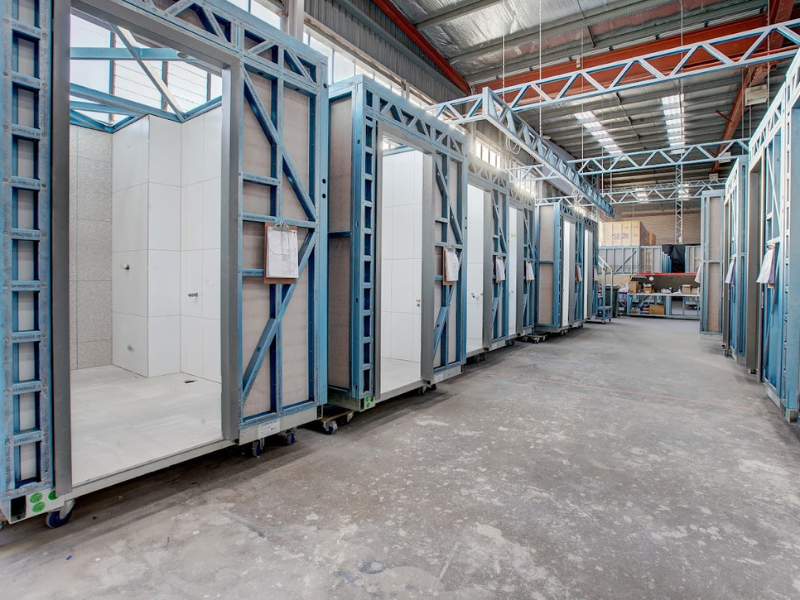
Modular Construction Is Growing Up
The offsite and modular construction sectors are no longer experimental. Around the world, I’m seeing the same trend: developers and builders are moving from early adoption to true industrialization.
Modular is maturing because the pressures are real - housing shortages, labor constraints, tighter timelines and stricter expectations. As output demands increase, so does the need for a material and a process that can keep pace.
That’s where LGS makes the difference.
Why Light Gauge Steel Drives Modular Efficiency
Working across multiple modular factories, the benefits of LGS have been consistently obvious:
1. Precision at Scale
Because LGS is produced from a coil on automated roll-formers, every stud, track and truss is identical. That level of accuracy is essential for modular because modules must align perfectly when assembled onsite.
2. High Strength, Low Weight
LGS delivers impressive structural capacity at a fraction of the weight of hot-rolled steel, timber, or concrete. Lighter modules mean:
- Reduced transport cost
- Smaller cranes
- Easier installation
- More predictable logistics
3. Dimensional Stability
Unlike timber, LGS doesn’t warp, twist, rot, shrink, or expand with moisture. In modular construction - where a building is assembled, transported, lifted and reassembled - this stability is critical.
4. Compatibility With Manufacturing Workflows
Modular success depends on process reliability.
LGS:
- Feeds directly from digital design into production
- Allows precise sequencing and traceability
- Supports just-in-time manufacturing
- Works perfectly with BIM and parametric 3D CAD tools
When you combine these factors, LGS doesn’t just support modular- it accelerates it.
.jpg?width=400&height=300&name=Seamless%20Integration%20(1).jpg) |
 |
The FRAMECAD Approach: Design → Manufacture → Build
One of the most valuable parts of my role at FRAMECAD is working with partners who are scaling modular production. The common thread between all successful factories is this:
They don’t see design, engineering, manufacturing and construction as separate stages. They see them as one connected workflow.
FRAMECAD supports that with:- Steelwise for accurate design and engineering
- Roll-forming systems that produce framing directly from the model or a digital twin
- Manufacturing controls that track every component
- Full BIM integration
- Support for multi-disciplinary teams across industrial designers, manufacturers, offsite builders and site crews
This digital-to-physical connection is what makes repeatable, scalable, modular production possible.
Factory Examples Around the World
I’ve seen the same pattern repeat across regions and applications:
Hyatt Hotels (USA)
Their panelized modular projects rely on LGS for rapid onsite assembly and strict quality control across repeated room types. The precision of the framing directly impacts the high standard of the final product.
Industrializing Modular: The Role of FRAMECAD Nexa
As modular moves into true mass production, operational challenges increase - scheduling, version control, material flows, quality tracking and overall orchestration.

That’s where FRAMECAD Nexa comes in. It’s built for factories that want real manufacturing discipline, giving teams:
- Clear production sequencing
- Complete traceability
- Automated documentation
- Version control
- Quality assurance workflows
It’s the kind of system you need when modular shifts from ‘project-based building’ to continuous manufacturing.
When you combine Nexa, LGS and repeatable modular design, you get a pathway to real scale.
Unlocking the Future of Modular Construction
Looking back across the last decade of my career, the biggest lesson I’ve learned is this:
Modular isn’t unlocked by clever design alone - it’s unlocked by integration.
Integration between:
- Digital models and physical products
- Structure and services
- Design teams and manufacturing teams
- Material science and construction logic
Light-gauge steel is the material that enables integration. A connected platform like FRAMECAD is the system that delivers it. Modular construction is the method that turns it into something scalable, repeatable and commercially viable.
Modular construction should be done with a manufacturing mindset, not a building site under a roof. If we want modular to truly achieve its potential, we need to treat buildings as products, not projects and design - both the structure and the process around that principle.
Light gauge steel gives us the precision
Digital workflows give us the control
Modular construction gives us the speed and quality
Put them together, (light gauge steel modular construction) and we get a better, smarter, more reliable way to build.
Want to learn more about how light-gauge steel can transform your next project? Reach out to industry experts here.