
Introduction to Cold-Formed Steel in Data Center Projects
Cold-formed steel framing has been used across residential, commercial, and institutional construction for decades. In the United States, it has proven particularly effective in mid-rise buildings and assisted living facilities. More recently, the use of cold-formed steel in data centers has emerged as a practical solution for developers seeking speed, predictability and performance.
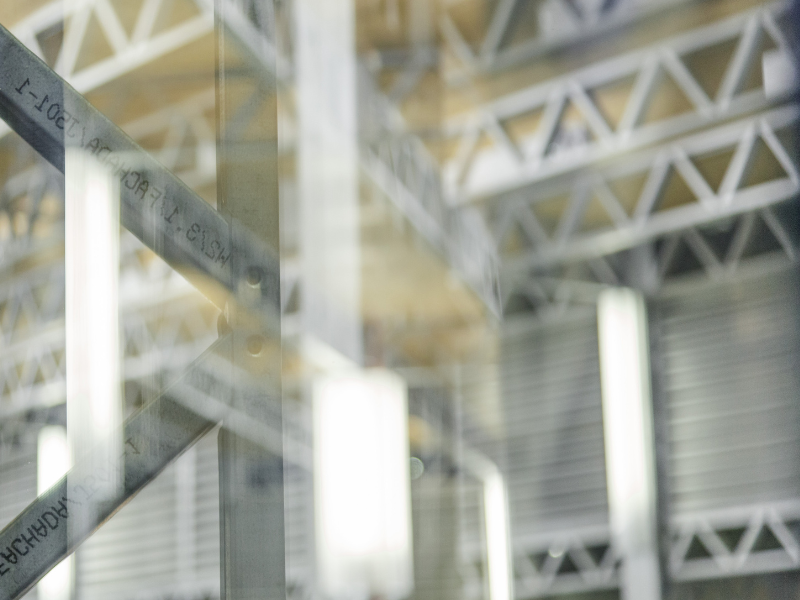
Cold-formed steel is particularly well suited to data centers due to the material’s high strength-to-weight ratio, non-combustibility, dimensional accuracy, and speed of installation. For developers, these attributes translate into shorter construction programs, improved cost certainty, and reduced risk. For manufacturers and panelizers, cold-formed steel (CFS) enables repeatable, scalable production that supports the aggressive timelines typical of data center projects.
Data Center Market Trends Driving CFS Adoption
Data centers house critical digital infrastructure, including servers, storage systems and network equipment. Facilities are typically categorized into tiers based on redundancy and uptime requirements. Regardless of tier, CFS provides a reliable structural platform capable of meeting stringent performance, fire safety and resilience expectations, key considerations for owners, insurers and investors alike.
Project scales vary widely. Smaller enterprise cold-formed steel data centers may range from 5,000 to 20,000 square feet, while hyperscale developments can exceed one million square feet and are increasingly delivered as multi-building campuses. With average facilities around 100,000 square feet, developers are seeking construction systems that can scale efficiently without introducing complexity. CFS supports this need through standardized framing solutions that can be adapted across projects and locations.
Why Cold-Formed Steel Works for Data Centers
“From a contractor’s perspective, repeatability is one of the defining characteristics of the data center sector. Many of these projects rely on the same architects and proven, repeatable design templates, which significantly reduces the need for redesign and change orders while accelerating overall delivery.” David Huff, Senior Project Manager, C.J. Coakley
The rapid growth of the data center market is being driven by cloud adoption, artificial intelligence, high-performance computing and the ongoing digitalization of public and private services. This has triggered unprecedented levels of infrastructure investment. McKinsey estimates global data center capital expenditure will reach approximately $7 trillion by 2030, with nearly $3 trillion allocated to real estate and power infrastructure. More than 40 percent of this investment is expected to occur in the United States, making it a critical market for both developers and steel framing suppliers and manufacturers.
The top 10 countries with the highest number of data centers are shown below:
|
Country |
No. of Data Centers |
|
United States |
5,426 |
|
Germany |
529 |
|
United Kingdom |
523 |
|
China |
449 |
|
France |
322 |
|
Australia |
314 |
|
Netherlands |
298 |
|
Russia |
251 |
|
Japan |
222 |
|
Brazil |
196 |
The number of data centers in the US has increased dramatically over the past two decades, exceeding 5,400 facilities by 2025. While projects are distributed nationwide, development is concentrated in key markets such as Virginia, California and Texas locations that combine access to power, connectivity, skilled labor, and supportive regulatory environments.
Northern Virginia alone has seen rapid growth, with the number of facilities increasing from approximately 450 to nearly 640 in just eighteen months, before expansion began shifting into surrounding regions such as Lake Anna, Richmond, Fredericksburg and Columbus, Ohio.
These factors, along with tax incentives and acceptance of industrialized construction methods, are central to site selection decisions.
The distribution of data centers in the US in 2025 is shown in the map below
.png?width=682&height=425&name=Data%20centers%20image%20(1).png)
Fastest-Growing Data Center Hubs in America Through 2030
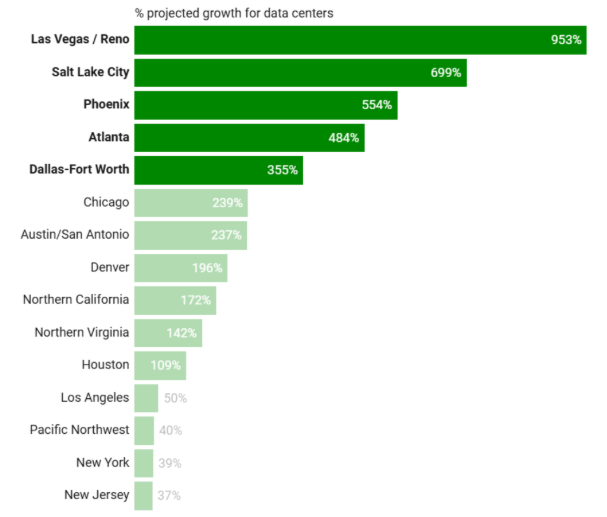
As data center construction accelerates, interest from the cold-formed steel industry continues to grow. While structural shells are often delivered using precast or tilt-up concrete, CFS is widely used for exterior façades and interior wall systems, both load-bearing and non-load-bearing. Internally, cold-formed steel data centers require tall, high-capacity walls to support dense equipment layouts. Wall heights are increasing, with typical ranges between 29 and 36 feet and some facilities incorporating three-story-high wall systems. CFS studs can be engineered with varying steel thicknesses to achieve the required heights and load capacities while remaining lightweight and easy to install. This flexibility allows manufacturers and panelizers to deliver solutions that accommodate future equipment upgrades and evolving tenant requirements.
“We typically run six-inch lines where engineering allows. When height and load requirements demand it, we’ll introduce wider flanges or specialty studs to meet the structural needs without compromising efficiency.” David Huff, Senior Project Manager, C.J. Coakley.
One of the key advantages of CFS framing is its constructability, which is driven by a design-led and highly coordinated manufacturing process. Rather than relying on onsite labor, framing systems are engineered upfront to support efficient installation, with interfaces to concrete or structural steel resolved early in the design phase. This reduces on-site complexity and enables faster, more predictable construction.
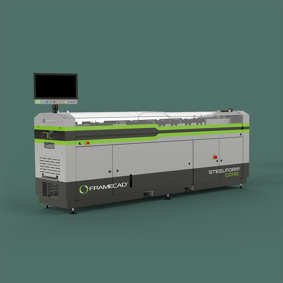
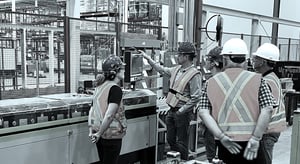
CFS panels are manufactured in controlled factory environments using automated roll-forming systems capable of producing tens of thousands of linear feet of steel framing per shift. This high-output process allows manufacturers to meet large-scale demand while consistently maintaining tight tolerances and quality standards.
In practice, some contractors survey wall dimensions, fabricate steel components to exact sizes in their warehouse, and ship them to the site for installation using engineered shop drawings tailored to each wall’s load and pressure requirements.
For developers, this translates into predictable schedules, reduced waste, and fewer site-related risks.
Schedules in the data center sector are particularly unforgiving. Large facilities are often delivered in eight to nine months, with smaller projects completed in as little as four to five months, and substantial liquidated damages applied for delays.
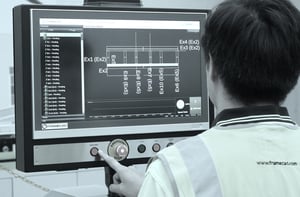
Design and compliance are supported through integrated engineering and detailing software such as FRAMECAD Steelwise. The software enables efficient code-compliant design to International Building Code (IBC) requirements and produces complete structural documentation suitable for permitting and approvals. By streamlining engineering and documentation, FRAMECAD Steelwise helps reduce design costs and supports faster project start-ups, an important advantage in a highly competitive development environment.
Want to learn more about how cold-formed steel can transform your next project? Reach out to industry experts here.