


Light gauge steel vs timber: what’s the difference?
Light gauge steel and timber can both be used for modular home construction, but they differ in manufacturing, material waste, fire performance and dimensional stability. Light gauge steel supports precision offsite manufacturing and is non-combustible, while timber offers familiar construction methods and an established supply chain.
For modular builders, the choice goes beyond material price. Manufacturing efficiency, transport, assembly and long-term performance can all influence project delivery.
Light gauge steel vs timber framing at a glance
| Light gauge steel | Timber | |
|---|---|---|
| Material waste | Precision manufacturing can eliminate offcuts and significantly reduce waste | Cutting and fitting can generate more material waste |
| Combustibility | Non-combustible | Combustible |
| Dimensional stability | Does not shrink, warp or swell | Can change with moisture |
| Termite resistance | Not susceptible | Susceptible |
| Manufacturing | Precision automated production | Can involve more manual cutting and fitting |
| End-of-life recyclability | 100% recyclable | Can be recycled or repurposed in some applications |
Light gauge steel for modular homes
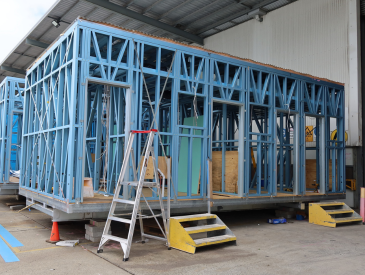
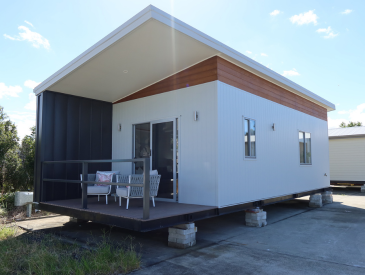
Light gauge steel (LGS), also known as cold-formed steel (CFS), is suited to factory-based modular construction because framing components can be designed and manufactured to precise dimensions.
With FRAMECAD Steelwise, design information flows into manufacturing, allowing wall frames, floor systems and roof trusses to be produced with required tooling, such as holes, cuts and connection details. This reduces manual processing and supports consistent, accurate and intuitive assembly.
 |
 |
Timber framing for modular homes
Timber is widely used in residential and modular construction, with an established supply chain and skilled workforce. It can also be easily cut and modified using conventional tools.
However, timber can absorb moisture and change dimension during storage and transportation. For modular manufacturers working to predefined dimensions, this can require additional fitting or adjustment during production and assembly.
Key considerations when comparing light gauge steel and timber
Material waste and cost control
Material price alone does not determine total framing cost.
FRAMECAD steel framing machines produce sections to specified lengths, generating around 2 to 3% material waste. This means builders can better plan how much material they need, with less leftover material to move, manage, or dispose of.
Fire performance
Steel is non-combustible and does not ignite or contribute fuel to a fire. Timber is combustible.
For modular projects with specific fire-performance requirements, framing material can therefore be an important consideration during design and specification.
Manufacturing and assembly
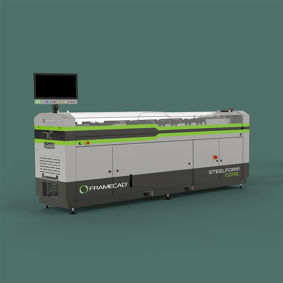
Light gauge steel framing can be produced using automated roll-forming equipment, with service holes, cuts and connection details incorporated during manufacturing.
This reduces manual measurement and processing and allows components to be manufactured ready for assembly. Timber can also be prefabricated, but its natural material variation can require additional adjustment on site.
Dimensional stability and durability
Light gauge steel does not absorb moisture, shrink, swell or warp, helping components retain their designed dimensions through manufacturing, storage, transportation and installation.
Timber can change dimension as moisture levels change and is susceptible to termites, rot and mold.
Sustainability
Timber is renewable when sourced from responsibly managed forests and stores carbon during tree growth.
Steel is 100% recyclable and can be recycled repeatedly. Precision manufacturing can also reduce material waste during production, providing another consideration when assessing the lifecycle of a modular framing system.
Why use FRAMECAD for modular construction?
FRAMECAD connects design, engineering and manufacturing within one cold-formed steel framing system.
Steelwise design and engineering software supports detailing and engineering and creates information for FRAMECAD roll-forming equipment, while FRAMECAD Nexa provides visibility across manufacturing workflows.
For modular manufacturers, this connected approach reduces information handoffs between design and production and provides an end-to-end system rather than standalone roll-forming equipment.
Considering light gauge steel for your next modular project? Talk to FRAMECAD about your production requirements.
Frequently asked questions about light gauge steel vs timber
Can a modular manufacturer transition from timber to light gauge steel?
Yes. Moving from timber to light gauge steel typically involves changes to design, manufacturing processes, equipment and assembly methods. Training and production planning are therefore important when introducing LGS into an existing modular manufacturing operation.
What information is needed before manufacturing light gauge steel framing?
Manufacturing begins with detailed design and engineering information defining elements such as frame dimensions, member sizes, openings, connections and structural requirements. With an integrated system, this information can be converted into machine-ready production data.
Can services be planned into light gauge steel frames during manufacturing?
Yes. Service holes and other required features can be incorporated into light gauge steel components during roll forming when they are included in the digital design. This can reduce the need for additional drilling or modification during later stages of assembly. It also prevents services to be installed in the incorrect position.