
Cold Formed Steel Construction for Fixed-Deadline Projects
Cold formed steel construction can offer advantages when a project requires non-combustible materials, precise manufacturing and delivery within a fixed timeframe.
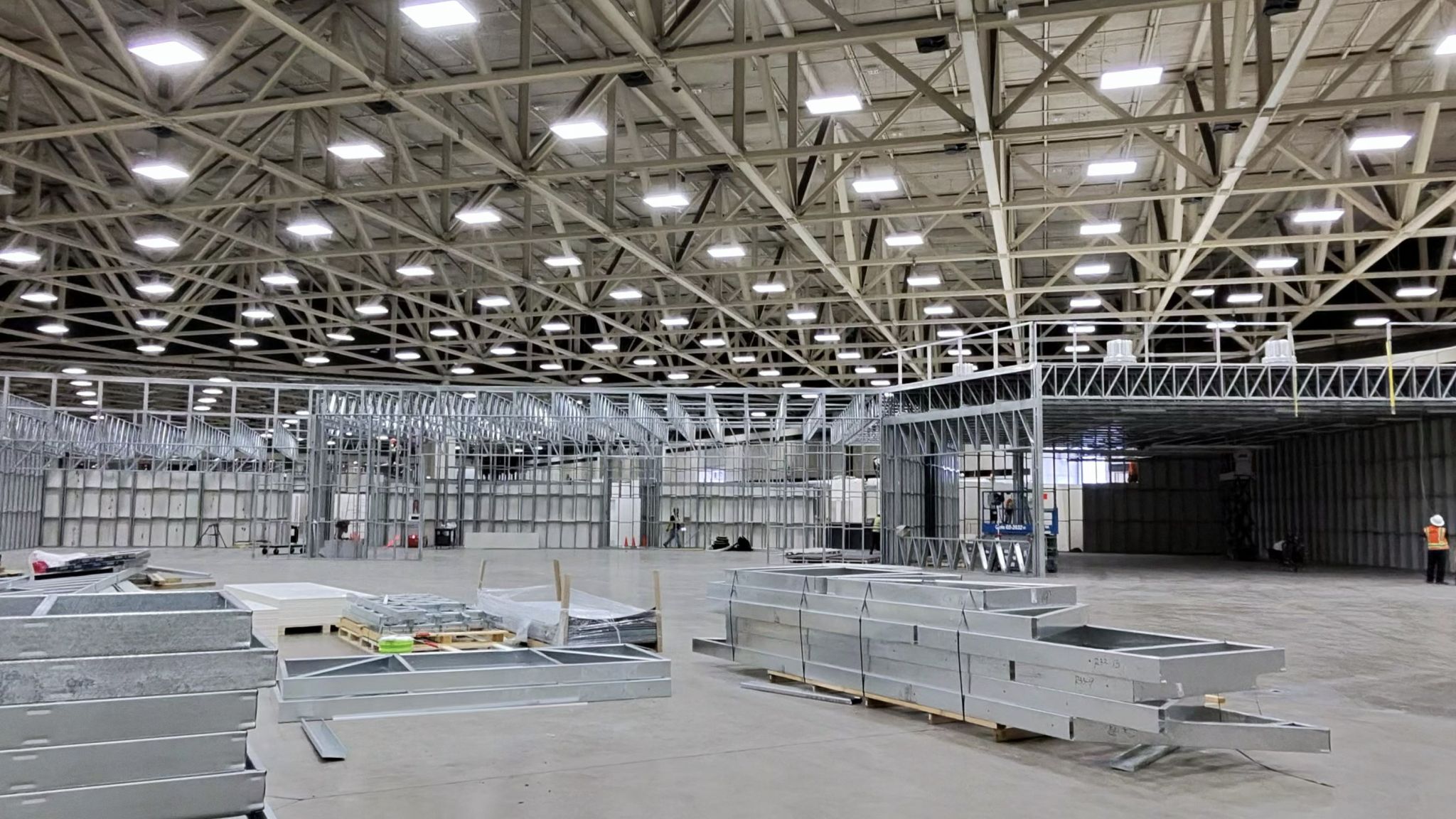
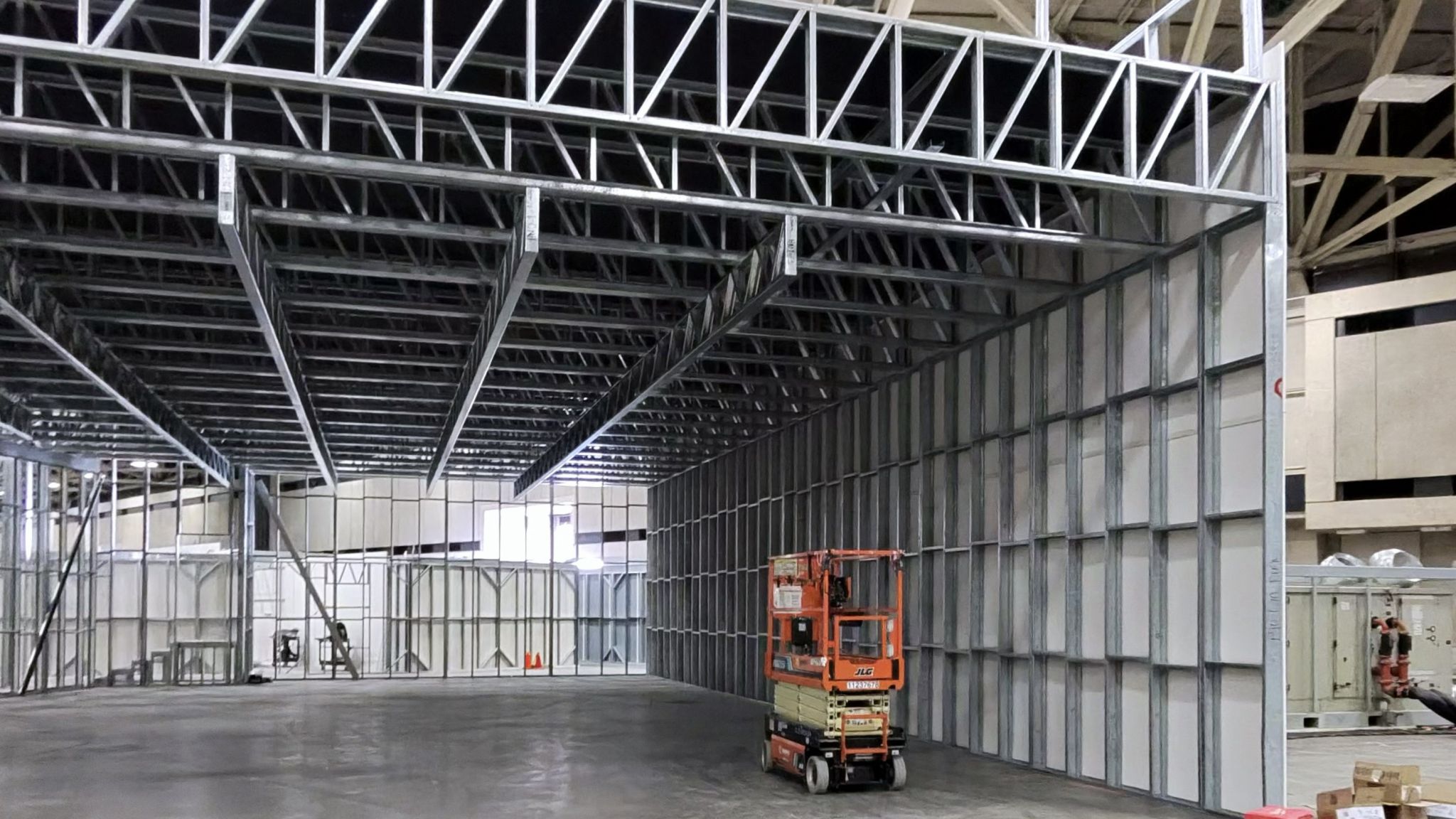
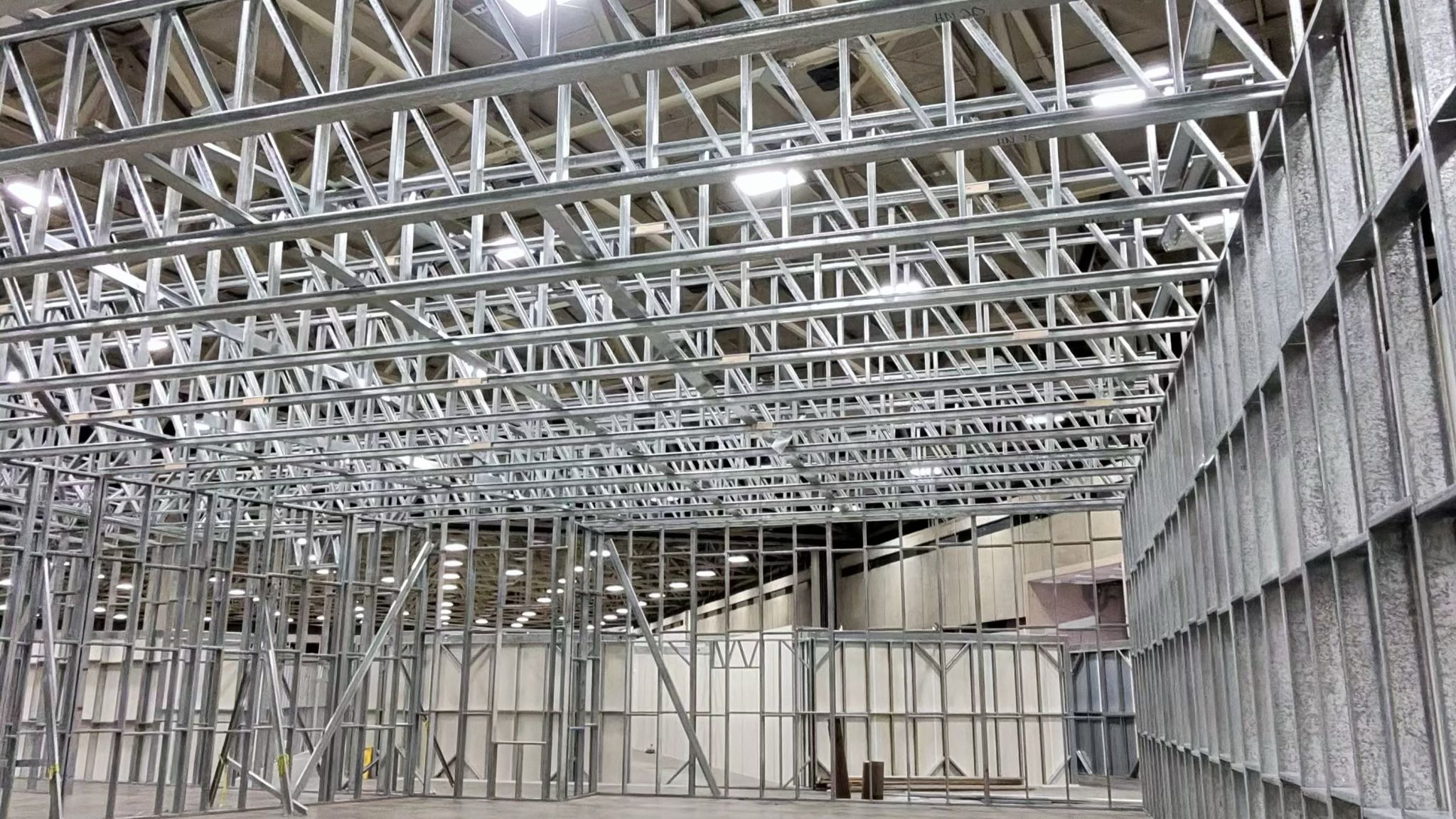
A large-scale temporary broadcast facility provides a practical example. Orlando Steel Framing, led by co-owner and CEO David Chai, used cold formed steel framing to help meet the demands of a time-critical project, including manufacturing, logistics and material reuse.
Why Use Cold Formed Steel for a Temporary Facility?
CFS framing can suit temporary facilities because it is non-combustible, can be manufactured offsite and can support efficient assembly.
Material selection was particularly important for this project because the temporary structure was being built inside an existing facility. Steel provided a non-combustible framing solution while meeting the requirements of a substantial temporary structure.
For developers, contractors, architects and engineers, it demonstrates why material selection should consider the construction environment, installation requirements and project timeframe alongside structural performance.
How Can Offsite Manufacturing Help Meet a Fixed Deadline?
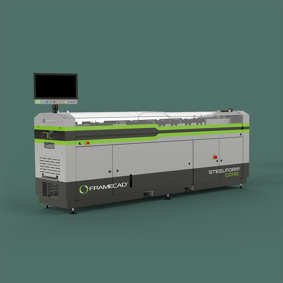
Offsite manufacturing allows framing components to be designed and produced before reaching the jobsite, helping teams coordinate production and installation around tight schedules.
With an immovable completion date, manufacturing and logistics were critical to this project.
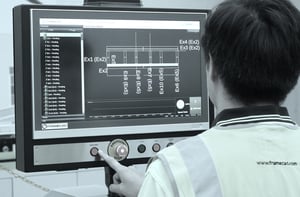
A manufacturing-led approach allowed framing components to be produced ahead of installation. Connecting digital design with manufacturing also gave teams an opportunity to identify potential issues earlier and reduce the need for modifications in the field.
For fixed-deadline projects, this can create a more predictable path from design through production to installation.
 |
 |
Can Cold Formed Steel Framing Be Reused?
Cold formed steel components can be designed with their next use in mind. Standardized panels, for example, may be recovered after dismantling and repurposed for partition walls or other temporary structures. Where reuse isn't possible, steel can be recycled.
This highlights the value of considering a material's entire lifecycle during the design stage rather than focusing only on initial construction.
What Can Construction Teams Learn From the Project?
The project highlights three practical considerations for teams evaluating cold formed steel construction:
-
Plan for CFS early: Early collaboration between engineering, design and manufacturing teams creates more opportunity to design around the framing system
-
Connect design and manufacturing: Resolving potential issues digitally before production can help reduce field modifications
-
Consider the full lifecycle: Manufacturing, installation, dismantling, potential reuse and recycling can all influence material decisions
Cold formed steel won't suit every project. However, for developers, contractors, architects and engineers considering non-combustible framing, offsite manufacturing and precise production, CFS is worth evaluating early.
If you would like to know more about cold formed steel construction, reach out to our team here.
Frequently Asked Questions about Cold Formed Steel for Fixed-Deadline Projects
Why is cold formed steel suitable for fixed-deadline projects?
Cold formed steel framing can be designed and manufactured offsite before installation begins. This can help teams coordinate production, delivery and installation around tight construction schedules.
How can offsite manufacturing help reduce construction delays?
Offsite manufacturing allows components to be produced in a controlled environment while other project activities continue. Connecting digital design with manufacturing can also help identify potential issues before components reach the jobsite, reducing the need for field modifications.
Why is cold formed steel suitable for temporary structures?
Cold formed steel can provide a lightweight, non-combustible framing solution that can be manufactured for efficient assembly. Depending on how the structure is designed, components may also be recovered after dismantling for reuse or recycling.
Can cold formed steel framing be reused after a temporary project?
Yes, depending on the design, condition and method of assembly. Standardized components may be suitable for repurposing in other applications, while steel can be recycled when reuse isn't practical.