

How Cold-Formed Steel Framing Improves Seismic Performance
Steel framing is highly earthquake resistant when properly engineered and designed to meet local seismic requirements. Cold-formed steel (CFS) framing combines a high strength-to-weight ratio with precision manufacturing, helping buildings resist seismic forces and perform predictably during earthquakes.
.png?width=800&height=600&name=Disaster%20relief%20(1).png)
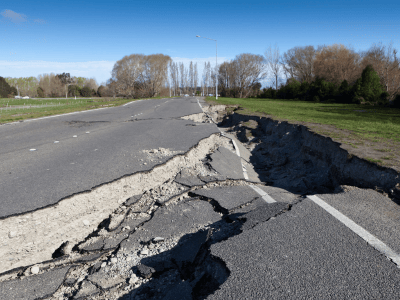
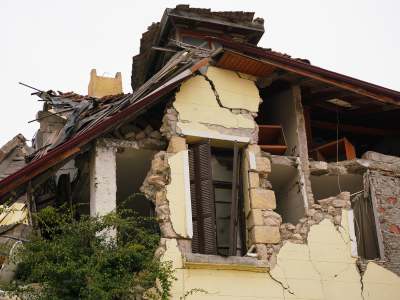
Earthquakes place significant forces on buildings, making structural design critical in earthquake-prone regions. Cold-formed steel framing is increasingly used because of its dimensional stability, manufacturing accuracy and consistent structural performance. While no building can be completely earthquake-proof, engineered steel framing systems are designed to meet seismic design requirements and reduce the risk of structural damage during an earthquake.
How Does Steel Framing Perform During an Earthquake?
Steel framing performs well during earthquakes because it can withstand significant loads while accommodating movement under seismic forces. Its lightweight construction can also reduce the forces acting on a building compared with heavier construction methods. When engineered and installed in accordance with local regulations, cold-formed steel provides a reliable structural system for earthquake-resistant design.
Why Cold-Formed Steel Is Well Suited to Seismic Design
Successful seismic design depends on more than selecting the right building material. It requires a complete structural system engineered to resist earthquake forces safely.
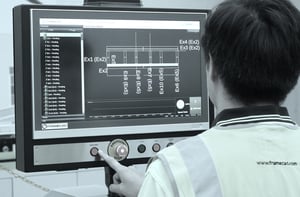
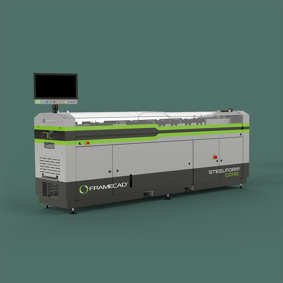
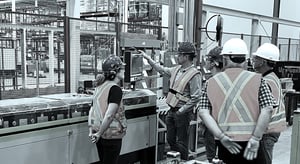
CFS framing supports earthquake-resistant construction through digital design, precision engineering and automated manufacturing. Components are produced to exact specifications, improving consistency and helping the completed structure perform as intended.
Steel Framing vs Timber in Earthquake-Prone Areas
Both steel framing and timber can be engineered for earthquake-resistant construction, but they have different characteristics.
Cold-formed steel offers a high strength-to-weight ratio, precise manufacturing and long-term dimensional stability. Timber, as a natural material, can warp and shrink and may be affected by moisture. Ultimately, a building's seismic performance depends on the complete structural design, engineering, connections and compliance with applicable building codes. Steel framing is highly predictable, giving it an advantage when buildings must withstand repeated lateral movement.
 |
 |
Where Is Earthquake-Resistant Steel Framing Used?
Steel framing is widely used in residential, multifamily and commercial buildings, as well as schools, healthcare facilities and modular construction. It is particularly common in regions where earthquakes are an important design consideration, including New Zealand, Japan, Chile and parts of North America.
As building codes continue to evolve, developers, builders and architects are increasingly choosing engineered steel framing systems that provide manufacturing precision, design certainty and efficient construction.
Build with Confidence Using FRAMECAD
Designing for earthquakes takes a complete system, not just strong material. FRAMECAD provides that integrated solution — combining structural engineering, precision manufacturing and efficient construction practices so you can deliver earthquake-resistant buildings with confidence.
Discover more benefits of building with steel framing here.
Frequently Asked Questions about Steel Framing and Earthquakes
Can steel-framed buildings withstand earthquakes?
Yes. When engineered to meet local seismic requirements, steel-framed buildings are designed to absorb and distribute earthquake forces, helping reduce the risk of structural damage.
What makes cold-formed steel suitable for seismic regions?
Cold-formed steel offers a high strength-to-weight ratio, dimensional stability and precision manufacturing, making it well-suited to engineered buildings in earthquake-prone areas.
Does a steel-framed building still need seismic engineering?
Yes. Every building must be engineered for its location, site conditions and applicable building codes. Steel framing is one part of an overall seismic design strategy.
Are steel-framed homes used in areas with frequent earthquakes?
Yes. CFS framing is used in many seismic regions around the world for residential, commercial and institutional buildings because of its consistent structural performance.
What factors influence how a building performs during an earthquake?
A building's performance depends on many factors, including structural engineering, connection design, building geometry, soil conditions and compliance with seismic building codes.