
Light Steel Frame Construction: Benefits, Process & Uses
LSF construction is a building method that uses cold-formed steel sections to create structural frames for walls, floors and roofs. It enables faster construction, high precision and reduced material waste compared to traditional building methods.
What Is LSF Construction?
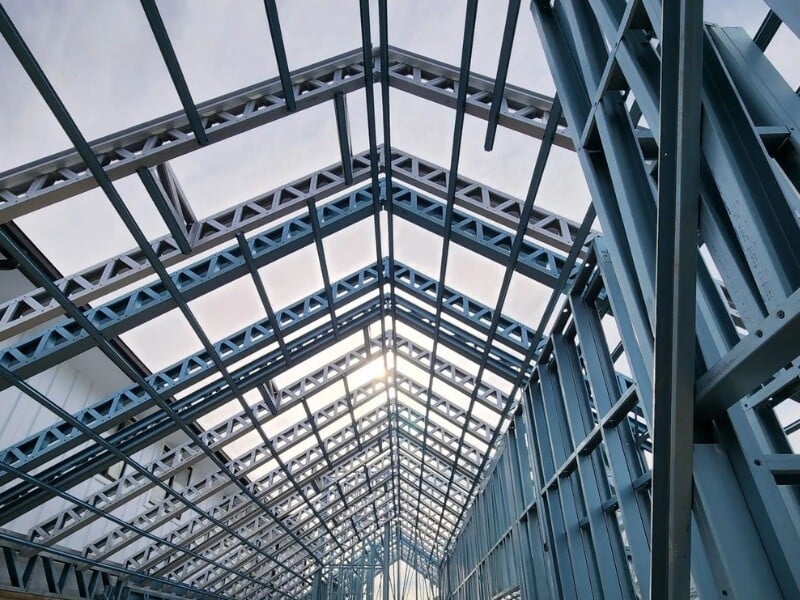
Light Steel Frame (LSF) construction is a modern building system that uses cold-formed, galvanized steel components to form the structural framework of buildings.
These lightweight steel sections are precision-engineered and assembled into wall panels, floor systems and roof structures. The result is a highly efficient construction method that improves build speed, accuracy and consistency.
LSF is widely used across residential, commercial and institutional projects, offering a scalable alternative to traditional construction methods such as concrete, brick and timber.
How Light Steel Frame Construction Works
In LSF construction, structural elements are formed from thin steel coils shaped into profiles such as studs, tracks and joists. These steel building components are designed to work together as a complete structural system.
The typical process includes:
Digital design and engineering
Projects are designed using specialized software to define structural layouts and specifications.
Manufacturing of steel components
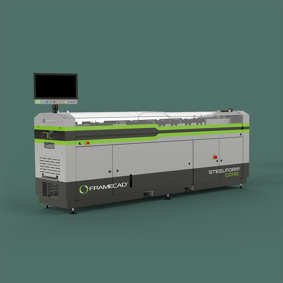
Galvanized steel coils are cold-formed into precise sections using automated machinery.
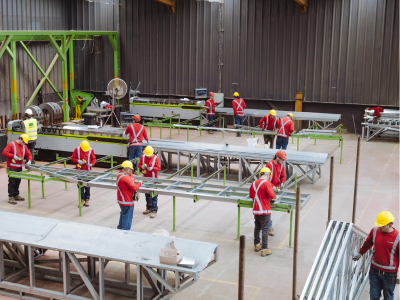
Panel or frame assembly
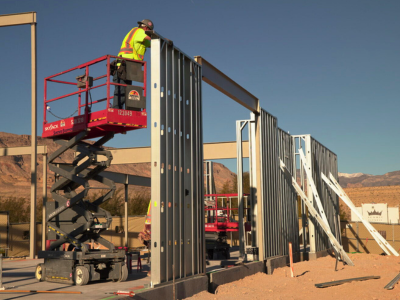
Components are assembled into wall panels, floor systems and roof structures either in a factory or on-site.
On-site installation
Prefabricated panels or frames are transported to the construction site and rapidly installed.
This streamlined workflow enables faster project delivery while maintaining consistency.
Why Light Steel Frame Construction Is Growing Worldwide
Light steel frame construction is gaining global adoption as the construction industry shifts toward more efficient and industrialized methods.
Faster project delivery
Reduced construction timelines allow projects to be completed sooner.
Consistent manufacturing
Factory-controlled processes deliver high-dimensional accuracy and repeatability.
Material efficiency
Precision manufacturing reduces excess waste and improves resource use.
Scalable production
Supports high-volume manufacturing, making it ideal for large developments and repeatable buildings.
These advantages are particularly valuable in markets facing housing shortages and increasing demand for infrastructure.
 |
 |
Where Light Steel Frame (LSF) Is Used
LSF construction is suitable for a wide range of building applications, including:
-
Residential housing
-
Multi-story apartment buildings
-
Schools and educational facilities
-
Hotels and accommodation
-
Healthcare buildings
-
Modular and off-site construction projects
Its flexibility and strength make it effective for both small-scale builds and large developments.
The Role of Manufacturing in LSF Construction
A defining feature of LSF construction is the integration of manufacturing into the building process.
Instead of relying solely on traditional on-site construction, structural components are produced using automated systems and digital workflows. This approach improves production efficiency, ensures consistency and reduces reliance on site conditions.
For manufacturers, LSF enables the creation of scalable production lines capable of delivering large volumes of building components with predictable outcomes.
Light Steel Frame vs Traditional Construction
Compared with conventional building methods such as brick, concrete, or timber, LSF offers several key advantages:
| Feature | Light Steel Frame (LSF) | Traditional Construction |
| Construction speed | Faster installation | Slower, site-based |
| Precision | High accuracy | Variable, site-dependent |
| Material use | Optimized | Higher waste potential |
| Scalability | Industrialized production | Limited scalability |
These benefits are driving increased adoption of LSF construction in many global markets.
Why Developers are Exploring LSF Construction
Developers are increasingly adopting light steel frame construction to improve efficiency and reduce project risk.
Key reasons include:
-
Shorter build timelines
-
Greater predictability in construction schedules
-
Reduced dependence on site conditions
-
Alignment with modern, industrialized building practices
As demand for housing and infrastructure continues to grow, LSF provides a practical solution for delivering projects at scale.
The Future of Light Steel Frame Construction
The construction industry is moving toward more industrialized, technology-driven methods, and LSF is playing a central role in this transformation.
Advances in digital design, automation and off-site manufacturing are enabling faster, more sustainable and more cost-effective building delivery.
As these technologies continue to evolve, light steel frame construction is expected to become an increasingly important part of modern construction worldwide.
Frequently Asked Questions About Light Steel Frame Construction
What is light steel frame (LSF) construction?
Light steel frame (light gauge steel framing) construction is a building method that uses cold-formed steel sections to create structural frames for walls, floors and roofs.
What does LSF stand for in construction?
LSF stands for Light Steel Frame, a construction system that uses cold-formed steel sections, manufactured from steel coils, to create building structures.
What are the advantages of LSF construction?
LSF offers faster construction, high precision, reduced waste and scalable production for large projects.
Where is light steel frame construction used?
It is used in residential housing, apartments, hotels, schools, healthcare facilities and modular construction.
Why are developers using LSF construction?
Because it enables faster delivery, predictable timelines and more efficient building processes.
Is light steel frame construction sustainable?
Yes. Steel is highly recyclable and precision manufacturing helps reduce material waste and improve efficiency.
Want to learn more about how light steel frame construction can transform your next project? Reach out to industry experts here.